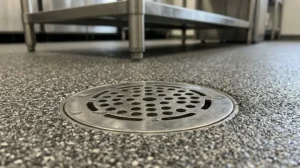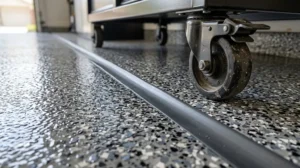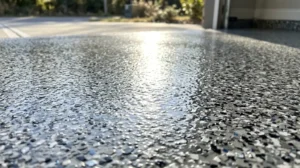
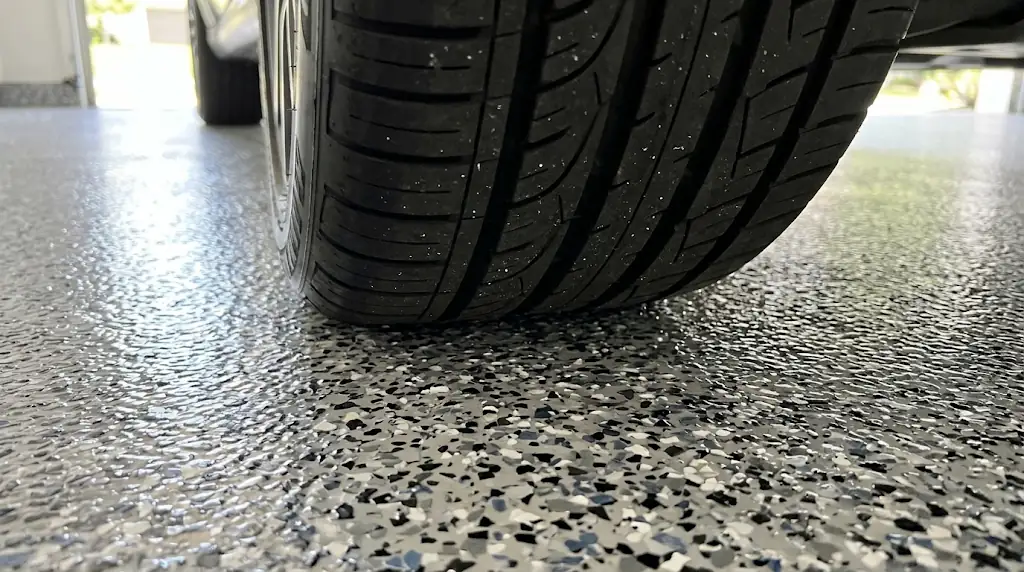
Aliphatic polyaspartic coatings and 100% solids epoxy-polyaspartic hybrid systems handle hot tire pick-up best in the Greater Austin area due to their high thermal threshold and dense cross-linked molecular structure. Single-part water-based DIY paints and basic acrylic sealers fail consistently because Central Texas highway driving heats tires to temperatures that melt and bond directly into inferior floor resins.
The Physics of Hot Tire Pick-Up in Central Texas
Hot tire pick-up is a mechanical and chemical failure that occurs when heated vehicle tires park on a coated concrete slab.
Automotive tires contain synthetic rubbers, carbon black, and petroleum-based plasticizers designed to keep rubber flexible at high speeds. During summer along the Interstate 35 and Highway 183 corridors, asphalt surface temperatures frequently reach 140°F to 160°F. Sustained driving at highway speeds increases internal tire tread temperatures to 150°F–175°F.
When a vehicle pulls into an enclosed garage in Round Rock, Cedar Park, or Pflugerville, the thermal dynamics shift:
- Thermal Softening: Trapped heat from tires and engine blocks causes garage ambient temperatures to spike above 115°F. Substandard coatings soften as tire heat transfers into the floor.
- Plasticizer Migration: The chemical plasticizers within the hot tire rubber physically leach into the softened resin of the floor coating, forming a direct chemical bond.
- Contraction and Tensile Pull: As the tires cool overnight, the rubber contracts and hardens. This contraction exerts intense upward tensile force. If the tensile bond between the tire and the coating exceeds the coating’s mechanical bond to the concrete, the coating shears away from the slab, leaving bare concrete under each tire footprint.
Garage Floor Coating Resistance Comparison
Different coating materials react differently under extreme tire temperatures, heavy vehicle weights, and friction loads:
| Coating Type | Max Temperature Threshold | Resistance to Plasticizer Migration | Pull-Off Adhesion Strength (ASTM D7234) | Resistance to Hot Tire Pick-Up |
| Water-Based DIY Epoxy Paint | 120°F–140°F | Very Poor (Softens rapidly) | 100–150 psi | Fails (Peels within 3–12 months) |
| 1-Part Solvent-Based Acrylic/Sealer | 130°F–150°F | Poor (Stains and lifts) | 150–200 psi | Fails (Tire tracking and peeling) |
| 100% Solids Epoxy (Base Coat) | 180°F–200°F | Moderate (Resists peeling, can tire-mark) | 350–400 psi | Good (Will not lift if mechanically prepped) |
| Aliphatic Polyaspartic Topcoat | 300°F+ | Excellent (Zero chemical transfer) | 400–500+ psi (Exceeds concrete strength) | Superior (Permanent resistance) |
Why Polyaspartic and Hybrid Systems Prevent Peeling
The industry gold standard for garage flooring across the Austin metro area is a hybrid installation: a 100% solids epoxy base coat topped with an aliphatic polyaspartic clear coat. This system eliminates hot tire pick-up through three specific engineering advantages:
1. High Glass Transition Temperature ($T_g$)
The glass transition temperature ($T_g$) is the point at which an amorphous polymer transitions from a hard, glassy material to a rubbery, viscous state. Water-based DIY kits have a low $T_g$ (often below 130°F), causing them to turn soft under parked tires. Industrial polyaspartics feature a $T_g$ exceeding 200°F and can tolerate flash heat up to 300°F without softening.
2. Dense Polymer Cross-Linking
Polyaspartics utilize an aliphatic polyurea reaction that produces tight, multi-dimensional molecular bonds. This cross-linked density makes the cured film completely non-porous. Automotive tire plasticizers cannot migrate into the topcoat resin, preventing the chemical fusing that tears weaker coatings apart.
3. Deep Mechanical Profiling
Adhesion failure occurs when coatings rely on chemical glues or weak acid washes. Professional systems require dry planetary diamond grinding to an International Concrete Repair Institute (ICRI) Concrete Surface Profile (CSP) of 2 to 3. The 100% solids primer sinks deep into the open concrete pores, anchoring with a tensile pull-off strength exceeding 400 psi. When stress is applied, the concrete aggregate itself will fracture before the coating separates from the surface.
Regional Factors Increasing Tire Stress in Central Texas
Several local factors make hot tire pick-up significantly more prevalent in the Austin metropolitan area than in other regions of the country:
- High-Speed Tollway Commutes: Highway 130 features the highest posted speed limit in North America (85 mph), while State Highway 45 and Mopac see sustained high-speed driving. Long commutes generate intense centrifugal and frictional tire heat before vehicles park in suburban garages.
- Heavy Vehicle Fleet Demographics: Central Texas residential driveways feature large volumes of full-size pickup trucks (such as Ford F-150s and Chevy Silverados) and heavy electric vehicles (such as Tesla Model Ys and Cybertrucks). The heavier curb weight of these vehicles multiplies the downward point-load pressure placed on hot tire footprints.
- Heat Island Effect: Rapid urban expansion across Round Rock, Pflugerville, and Cedar Park has increased heat retention across roadways, keeping asphalt and vehicle tires hot well into late summer evenings.
Specific Service Area Dynamics
Driving patterns and neighborhood configurations across our local cities influence hot tire wear:
- Round Rock & Pflugerville: Commuters returning from downtown Austin or the Domain via I-35 park immediately after high-friction stop-and-go highway driving, creating peak localized tire heat transfer in residential garages.
- Hutto & Taylor: High-speed travel on SH 130 generates maximum internal tire friction. Hybrid systems with polyaspartic topcoats are mandatory to resist high heat transfers in these communities.
- Cedar Park & Leander: Suburban developments with long, exposed west-facing driveways absorb intense daytime solar radiation. Slabs stay hot past sunset, requiring topcoats with maximum thermal stability.
- Georgetown & Liberty Hill: Heavy utility vehicles, work trailers, and equipment haulers place higher psi shear stress on garage thresholds and parking pads, making full-broadcast flake traction layers essential.
Best Practices to Protect Your Floor Coating
A properly installed hybrid polyaspartic floor will never peel under hot tires. However, following basic operational guidelines preserves gloss and cleanliness:
- Adhere to the Full 48-Hour Vehicle Cure: Never park a vehicle on a newly installed polyaspartic coating before the 48-hour chemical cure window closes. Even if the floor feels dry to the touch, full cross-link density requires two full days.
- Beware of Cheap Tire Shines: Low-grade, solvent-heavy silicone tire shine products can leave oily films that trap street dust. Use water-based tire dressings to prevent surface residue buildup.
- Turn Wheels While Moving: Avoid cranking power steering while your vehicle is completely stationary on any coated surface. Turning tires while rolling minimizes rotational friction against the topcoat.
Eliminate Hot Tire Failure Permanently
Hot tire pick-up is completely preventable with commercial-grade polymer chemistry and professional mechanical prep. If your garage floor suffers from peeling tire tracks or failing paint, an industrial flake polyaspartic system will restore and permanently protect your concrete. Contact Round Rock Epoxy Flooring today through our contact page to schedule an on-site concrete inspection and get a durable, heat-resistant floor for your home.